

If you are planning an extension, a loft conversion or a whole-home refresh, bringing in more daylight is usually high on the list. Daylight makes rooms feel larger, colours look better and spaces are more enjoyable to live in. The two most common ways to add light from above are flat rooflights for flat or very low-pitch roofs, and skylights (roof windows) for pitched roofs. Both can work well, but they are not the same. This guide explains what each product is, how they differ, and crucially why flat rooflights tend to be the better choice for modern homes and contemporary extensions. The tone is simple and practical, with a gentle bias toward rooflights because, for most of today’s projects, they deliver the cleanest look, the most even daylight and the least day-to-day fuss.
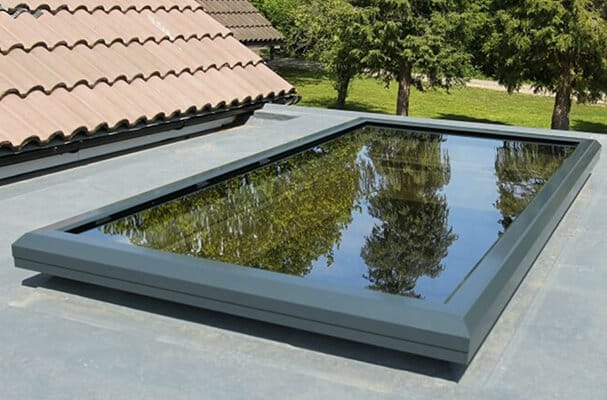
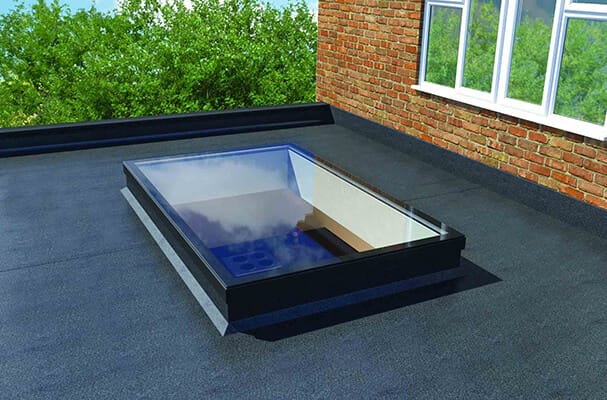
A flat rooflight is a glazed opening designed for flat and low-slope roofs. The unit sits on an insulated upstand so water flows away from the glass edges. The best rooflights use thermally broken frames, low-E glass and warm-edge spacers so the inner pane stays close to room temperature in winter. From inside the house the ceiling reveal can be trimmed to look almost frameless. You do not read it as a window; you read it as a calm cut-out of sky. On a single-storey rear extension or a garden room this is exactly the feeling most people want.
Many rooflights are fixed because they are placed directly above a task area, such as a kitchen island or dining table, where the goal is quiet, even daylight. Opening versions exist and can be automated if purge ventilation is needed. There are also walk-on models for terraces so you do not lose outdoor space while lighting rooms below. For privacy, obscure or satin glass keeps neighbours from seeing in but still lets generous light through.
“Skylight” is often used to describe roof windows fitted to pitched roofs. These units sit among tiles or slates and rely on shaped flashing kits to keep weather out. They can be centre-pivot, top-hung or motorised, and many rotate so you can clean the outer face from inside. Skylights are the natural choice for loft bedrooms, attic studios and stairwells where the structure is pitched and the opening needs to sit in line with the roof covering. They bring fresh air easily because warm air gathers high up and can escape through the opening.
In real homes the decision comes down to a few practical points: appearance, daylight quality, thermal performance, upkeep, durability and budget. Below is a straight comparison with a modern-home lens, leaning toward the places where a rooflight simply does a better job.
Modern extensions demand clean lines. Flat rooflights deliver that minimalist look with ease. From street level, you usually see little more than a flush sheet of glass sitting low to the roof; from inside, the opening reads as a simple rectangle of sky with almost no visible frame. This calm ceiling line is what lets new kitchens and open-plan living rooms feel ordered rather than busy. Skylights, by contrast, always look like windows. Frames, sashes and flashings bring visual detail. On traditional roofs that can be charming, but in contemporary spaces it can break the quiet language you are trying to achieve. If your aim is a gallery-like ceiling and a consistent modern aesthetic, rooflights are the natural fit.
Flat rooflights sit close to horizontal and “see” a large area of sky. Light drops straight down and spreads evenly, which is why a small rooflight over a worktop or table often transforms the entire back half of a plan. You do not get hard stripes of sun across the room; you get an even wash. Skylights send directional light that changes more through the day because of the roof pitch. That can be lovely in a loft studio but less helpful when you need reliable working light over a kitchen island from October to March. If your priority is consistent, task-friendly daylight, rooflights win again.
Both product types can achieve strong whole-window U-values with the right glass and frames. The difference you feel is often about how the opening is used. Because rooflights sit above the activity zone, you turn electric lights on later in the day and off earlier at night. Modern rooflights also take solar-control coatings well, so south and west facing extensions stay comfortable in summer without resorting to heavy blinds. Skylights are excellent ventilators in lofts, but they also add more visible detail and moving parts to maintain. If you are upgrading a flat-roof extension that already struggles with overheating, a rooflight using selective solar glass will usually be easier to live with than a series of skylights in a new, shallow pitch.
Flat rooflights are simple to keep clear. Many have easy-clean coatings, and the smooth outer face encourages rain to do most of the work. A quick wash from time to time keeps them brilliant. Walk-on versions are even easier, because you can stand on them safely and wipe them over. Skylights are designed to rotate for inside cleaning, which is a genuine advantage on upper storeys, but that benefit is less important for single-storey extensions where access is straightforward. For most ground-floor modern homes, the rooflight remains the low-maintenance choice.
A well-detailed rooflight is as robust as the roof around it. The upstand height keeps edges out of standing water; thermally broken frames protect seals; laminated inner panes keep the inside safe even if the outer takes an impact. Problems usually come from poor junctions rather than from the product. Skylights are also durable when the flashing kit exactly matches the tile or slate profile and pitch, but that matching step is where many site errors creep in. With rooflights, the waterproofing is a simpler lap and dress detail across a flat surface. Fewer variables mean fewer surprises in British weather.
Costs vary widely with size, access, glazing and controls, but a pattern appears in modern projects. A fixed rooflight of a useful size is often more economical than an opening skylight delivering similar light because there is no sash hardware. The saving can be spent where it matters: better glass, a lower whole-window U-value, or a solar-control coating. Installation is usually faster as well, particularly on new single-storey extensions where a crane lift for one or two rooflights is simpler than a run of pitched skylights with individual flashings and trims.
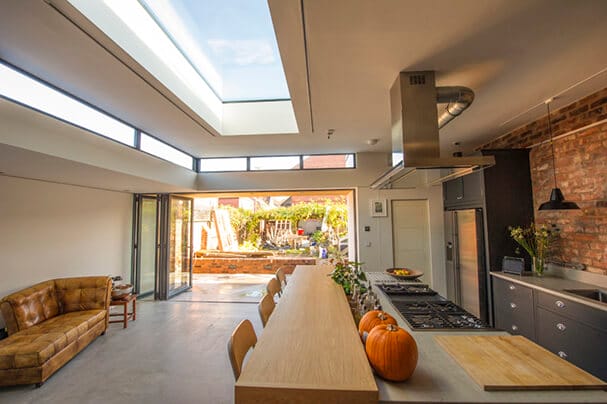
Most contemporary homes in the UK create new living space with flat-roofed rear extensions. In that setting, rooflights suit the architecture and the way people actually use their rooms. They place light exactly where it is needed over islands, tables and reading corners without cluttering the ceiling line. They support a consistent interior design language, from minimal kitchens to calm family rooms. They are easy to specify for privacy with obscure glass, or for summer comfort with a subtle solar-control finish. And they rarely ask for complex maintenance routines. In short, when the roof is flat, the modern answer is the modern product: a flat rooflight.
Skylights still have a perfect role in pitched loft spaces, where you want a window you can open wide for air and where the frame belongs visually with the slates. This is not a matter of one being “good” and the other “bad”; it is about choosing the tool that serves the space. For a modern home, that means rooflights in new single-storey zones and skylights only where the roof form needs them.
Choose a flat rooflight whenever the roof over the target room is flat or nearly flat and you want even, quiet daylight. The classic example is a kitchen-diner extension where the family spends most of its time. A single rooflight centred over the island often removes the need for daytime artificial light, and a pair of smaller units along a work zone keeps shadow off preparation surfaces. Rooflights are also right for internal bathrooms and hallways that need privacy, because an obscure pane gives soft light without views in or out. If you plan to use the roof as a terrace and still need light below, a walk-on rooflight gives you both.
Another situation that favours rooflights is when you care about the outside look as much as the inside. A frameless-look rooflight sits almost invisibly behind a parapet and does not disturb planning lines, which helps in conservation areas or on tight urban terraces. It is also kinder to neighbours because there are no raised lanterns or protruding frames.
Use skylights when you convert a pitched loft and want windows that look and behave like windows. In bedrooms and studios high in the roof, being able to swing a sash open for a rush of fresh air is a daily comfort. Cleaning the exterior from inside is a big win on upper floors. And where planning demands a traditional roof appearance, conservation skylights with slim profiles keep the look tidy. In short, when the roof is pitched and you want outward views and easy ventilation at height, skylights are the natural solution.
If you are working on a modern home with a flat or very low-pitch roof over the main living areas, choose flat rooflights. They give the calmest ceilings, the most even daylight and straightforward performance. Specify a thermally broken frame, low-E double or triple glazing, and a solar-control coating where the opening faces strong sun. Place each rooflight directly over the activity that needs light, and detail the upstand and airtight junctions with the same care you would give a window.
If your project is a loft or attic under a pitched roof, choose skylights that sit neatly among the tiles, open for fresh air and clean from the inside. They are the right answer for that roof form and are proven in millions of installations.
Many homes benefit from both: rooflights over new extensions to keep the plan bright and minimal, skylights in the original pitched roof for views and ventilation. The rule that never fails is this: match the product to the roof, and match the opening to how the room will be used. Do that, and the house will look modern, feel comfortable through the seasons, and make the very best of the light above.


Send us your contact details and a specialist will get in touch with you.